
Technology
Uganda Launches Nationwide AI Literacy Program
The program aims to train 100,000 citizens in AI fundamentals by 2027.
Kampala, Uganda – In a significant milestone for Uganda’s digital infrastructure, Elon Musk’s satellite internet provider Starlink has received an operational license, paving the way for expanded high-speed internet access across the country, particularly in underserved rural areas.
MJ Walusimbi
21 June 2026
President Yoweri Kaguta Museveni witnessed the signing of a Memorandum of Understanding (MoU) and the operational license agreement between the Uganda Communications Commission (UCC) and Starlink on May 15, 2026, at State House Entebbe. The event marks the resolution of months of regulatory uncertainty that had previously led to a temporary shutdown of Starlink services in the country
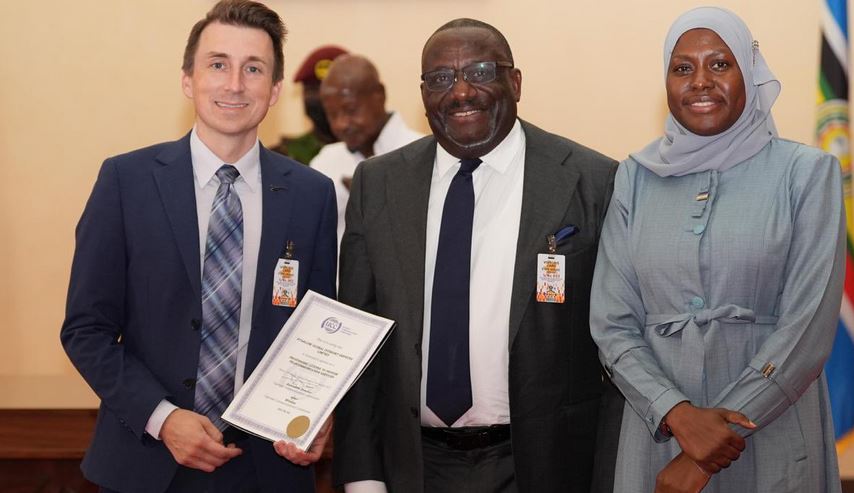
“I witnessed the signing of the Memorandum of Understanding and operational licence agreement between the Uganda Communications Commission and Starlink, marking an important step towards the commencement of their operations in Uganda,” President Museveni posted on X (formerly Twitter). He expressed pleasure that Starlink had committed to complying with Uganda’s laws and regulatory requirements.
UCC Executive Director Nyombi Thembo and Starlink’s Senior Director for Market Access and Development, Ryan Goodnight, led the signing. Also present were U.S. Ambassador to Uganda William Popp and officials from the Ministry of ICT and National Guidance.
Background of Regulatory Hurdles
The approval comes after a challenging period. Earlier in 2026, ahead of Uganda’s general elections, the UCC directed Starlink to cease operations due to the lack of a valid license. On January 1, 2026, Starlink disabled service for all terminals in Uganda, confirming that no active devices remained operational in the country.
Import restrictions on Starlink equipment had also been tightened, requiring high-level approvals. The company maintained it had not been selling or marketing services locally without authorization and expressed willingness to work with regulators to complete the licensing process.
Expected Impact and Conditions
Starlink’s entry is expected to transform Uganda’s telecommunications landscape by providing low-Earth orbit satellite broadband that bypasses traditional infrastructure limitations. This is particularly vital for remote and hard-to-reach regions where fiber optic and mobile coverage remain limited.
As part of the licensing conditions, Starlink is required to establish a national gateway, maintain a physical presence in Uganda, and open an operational office with dedicated technical and legal staff. The company has also committed to broader compliance on issues such as security, revenue assurance, and data sovereignty.
Uganda becomes the latest African nation to welcome Starlink, joining countries like Nigeria, Kenya, Rwanda, and others. The service promises speeds suitable for education, healthcare, agriculture, and business in areas previously disconnected from reliable internet.
Reactions and Outlook
Stakeholders have welcomed the development as a boost to Uganda’s Digital Uganda Vision and efforts to bridge the digital divide. Critics and analysts, however, continue to monitor how the licensing balances expanded access with government oversight.
Starlink kits are anticipated to become available soon, with rollout details expected from the company and UCC in the coming weeks.
This partnership underscores growing private-sector involvement in Africa’s digital transformation, leveraging innovative satellite technology to drive economic growth and inclusion.
MJ Walusimbi
21 June 2026 · 2 min read
More from Technology
The program aims to train 100,000 citizens in AI fundamentals by 2027.

Uganda's Computer Misuse Act strengthens cyber security but critics warn it stifles free speech via vague 'malicious information' and hate speech laws, with life sentences possible for attacks on protected systems.
Comments