KARENGA DISTRICT, UGANDA — For decades, Kidepo Valley National Park has been celebrated as Africa’s untouched wilderness. Its appeal lies precisely in its rugged isolation, far removed from the bustling tarmac of Entebbe.
But the silence of the savannah is about to be broken by the roar of wide-body jets.
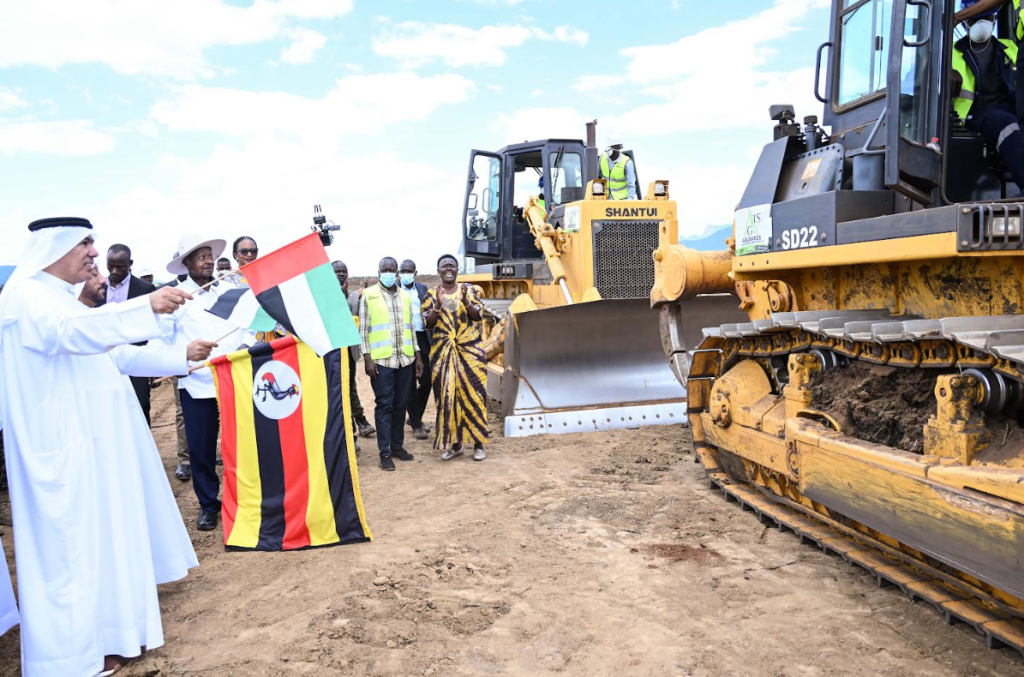
Over the weekend, President Yoweri Museveni officially broke ground on the Kidepo International Airport, a massive $72 million (approx. sh271 billion) infrastructure project funded in partnership with the UAE’s Sharjah Chamber of Commerce and Industry.
While the government heralds the project as the ultimate key to unlocking the Karamoja sub-region's economic potential, the sheer scale of the development raises questions about the future of Uganda’s most pristine ecosystem and the traditional lifestyle of its inhabitants.
Not Just an Airstrip
This is not a simple bush-strip upgrade. According to Olive Birungi Lumonya, Deputy Director General of the Uganda Civil Aviation Authority, the new facility is designed as a Code 4E international airport, with provisions to expand to Code 4F.
To put that in perspective, a Code 4F airport is designed to handle the world's largest commercial aircraft, including the Airbus A380 and Boeing 747.
The proposed blueprints are staggering for a remote national park:
A 3,000 to 3,600-meter runway capable of handling long-range flights.
A 7,408-square-meter passenger terminal.
A massive 74,200-square-meter cargo terminal.
The government's vision is clear: transform Karamoja from a marginalized outpost into a global gateway for tourism and international cargo.
A Mandate for Cultural Upheaval
Beyond the environmental footprint, the airport signals a drastic, mandated cultural shift for the people of Karamoja.
During the launch, President Museveni delivered a blunt message to the residents of Karenga district, urging them to abandon traditional ways of life. He pointedly advised locals that relying on "goats, sheep, and donkeys" is a subsistence activity that stunts income. Instead, he pushed for an immediate pivot toward "modern economies"—specifically commercial agriculture, manufacturing, services, and ICT.
“Please let us know what is good for our country," Museveni stated, presenting the UAE-backed investment as an opportunity the region must adapt to.
According to Abdallah Sultan Al Owais, chairperson of the Sharjah Chamber of Commerce, the project is already altering the local economy, currently employing 1,620 Ugandans in its initial phases.
The Conservation Balancing Act
The core conflict lies in what makes Kidepo valuable in the first place. Tourists endure long, dusty drives or charter small planes specifically to escape heavy commercialization. Introducing a 74,000-square-meter cargo terminal right next door introduces heavy logistics, noise pollution, and high human traffic into a fragile ecosystem.
While Museveni briefly noted the need to adhere to the government's "strategic guidance for tourism conservation," details on how the wildlife will be protected from the massive influx of heavy aviation traffic remain sparse.
A Nationwide Aviation Push
The Kidepo project is just the tip of the spear. The government has aggressively outlined plans to upgrade aerodromes across the country—including in Pakuba, Kabale, Kisoro, Arua, Gulu, and Kasese—by the 2029/50 financial year, alongside pursuing another major international airport in the Mbarara district.
As the earth-movers begin tearing into the dirt in Karenga, Uganda faces a defining test. The Kidepo International Airport will undoubtedly bring global connectivity and UAE dollars to Karamoja. The lingering question is whether the region can survive the shock of jumping straight from pastoralism to managing wide-body Boeing jets—and whether the "true wilderness" of Kidepo will survive the concrete.





Comments